Measurable business benefits with real social impact

Transformation stories that inspire

Our projects not only optimize costs but truly transform organizations - from corporate culture to brand perception in the market. We create value that goes far beyond financial aspects.

19 Years of Experience in Human Resources

Our collaborations show that PFRON cost optimization is just the beginning of positive changes in an organization.

What does the invoice leave out? The cost of things that work.

Key indicators of our implementations:

Our projects not only optimize costs but truly transform organizations – from corporate culture to brand perception in the market. We create value that goes far beyond financial aspects.

Shape

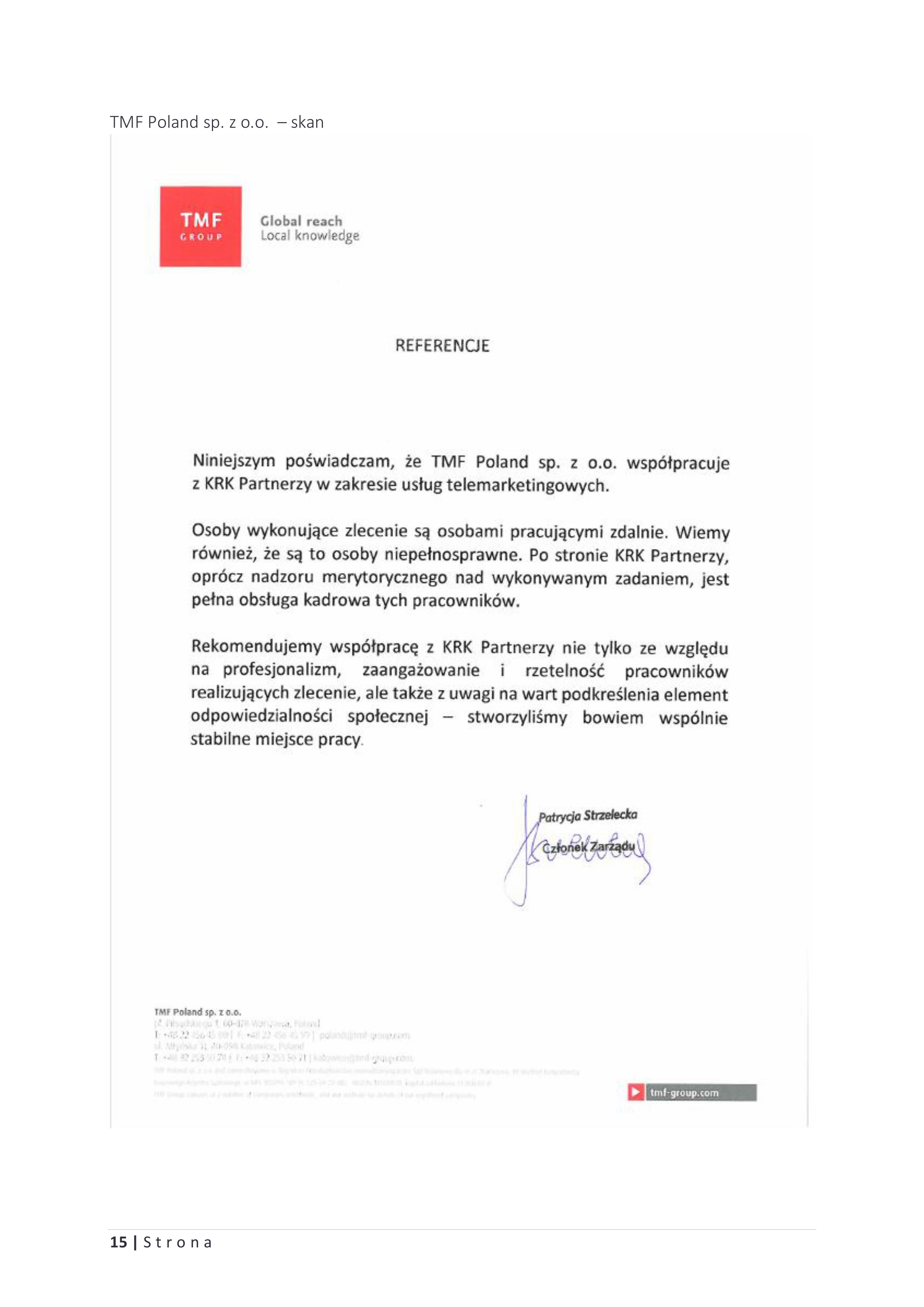
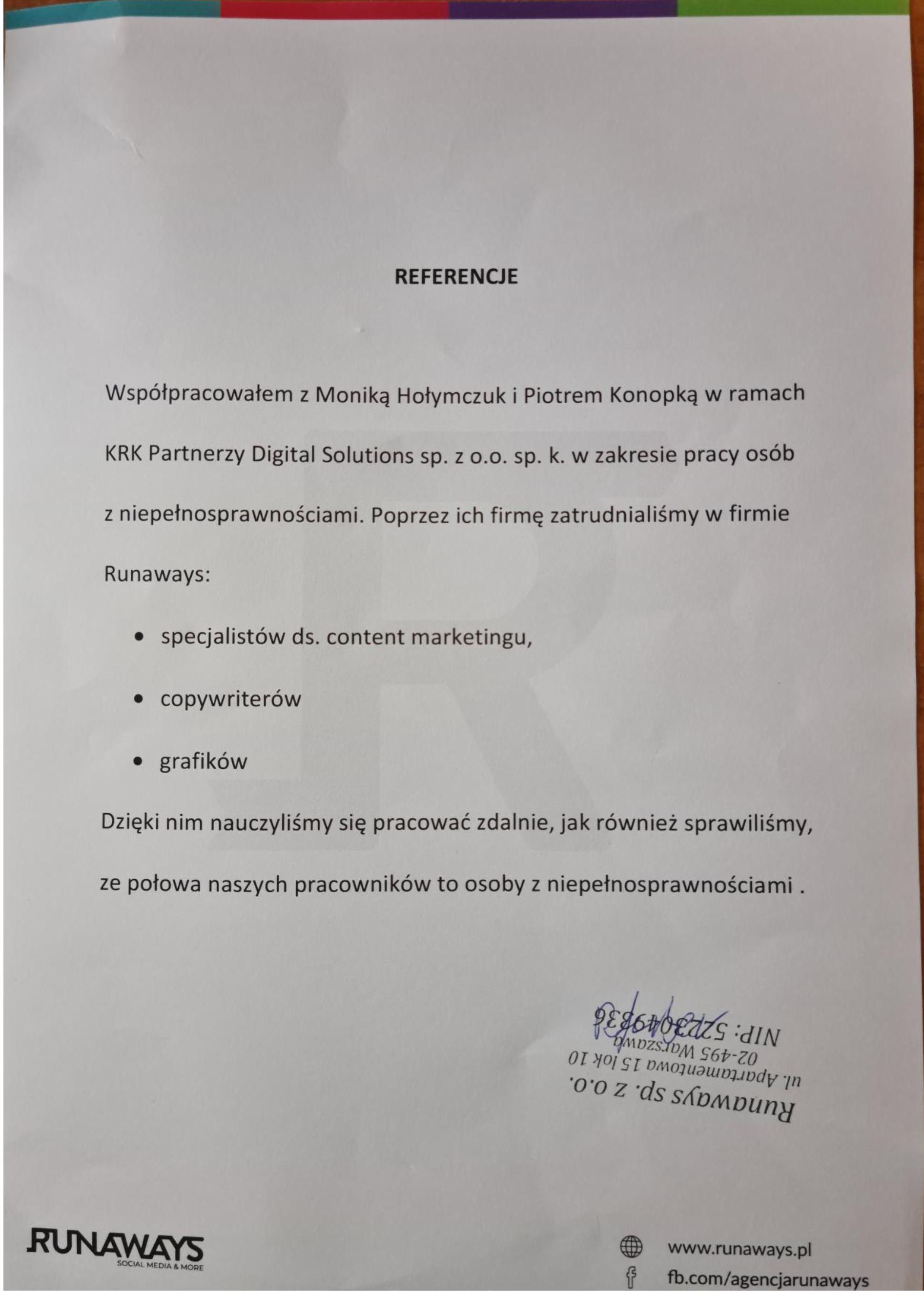
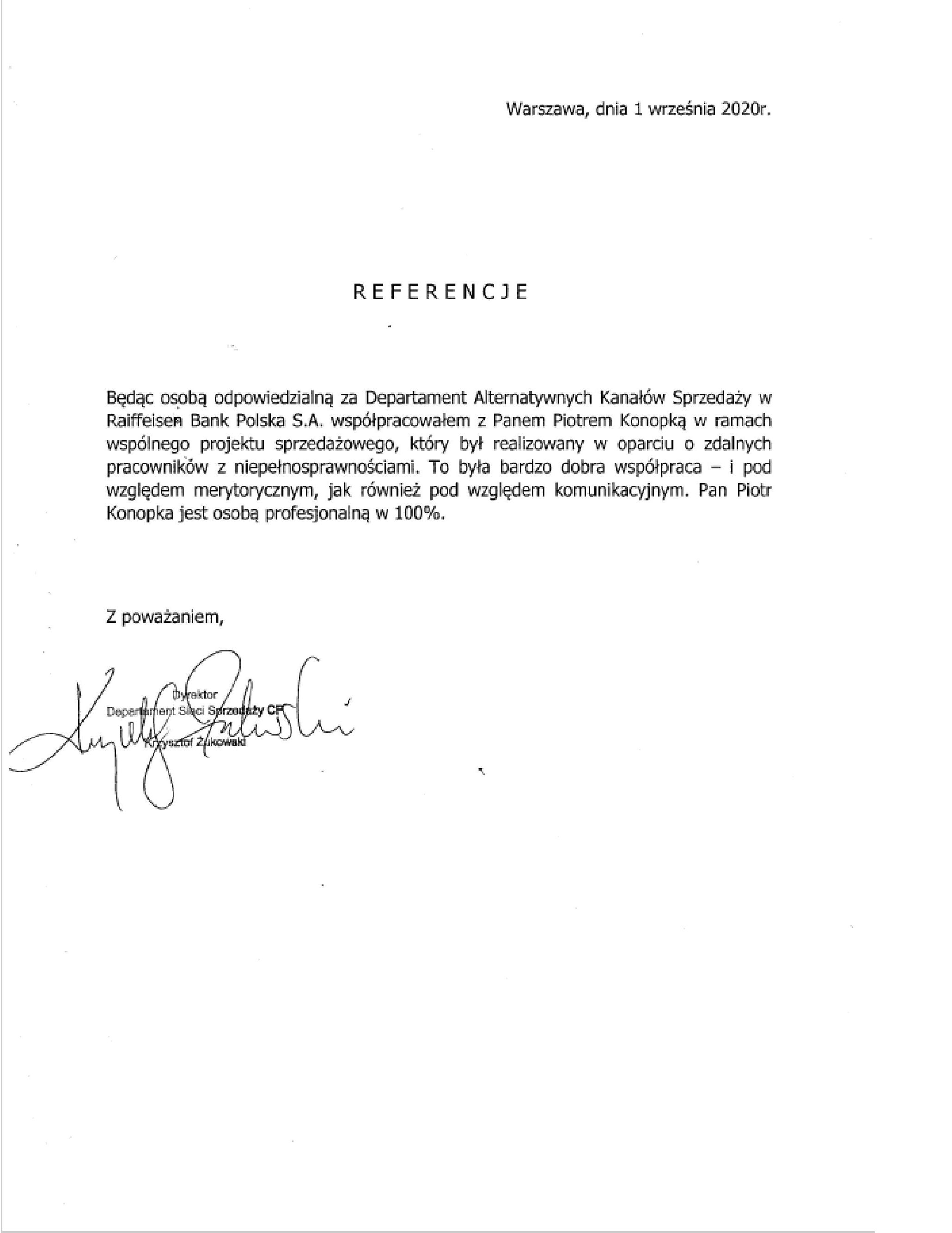
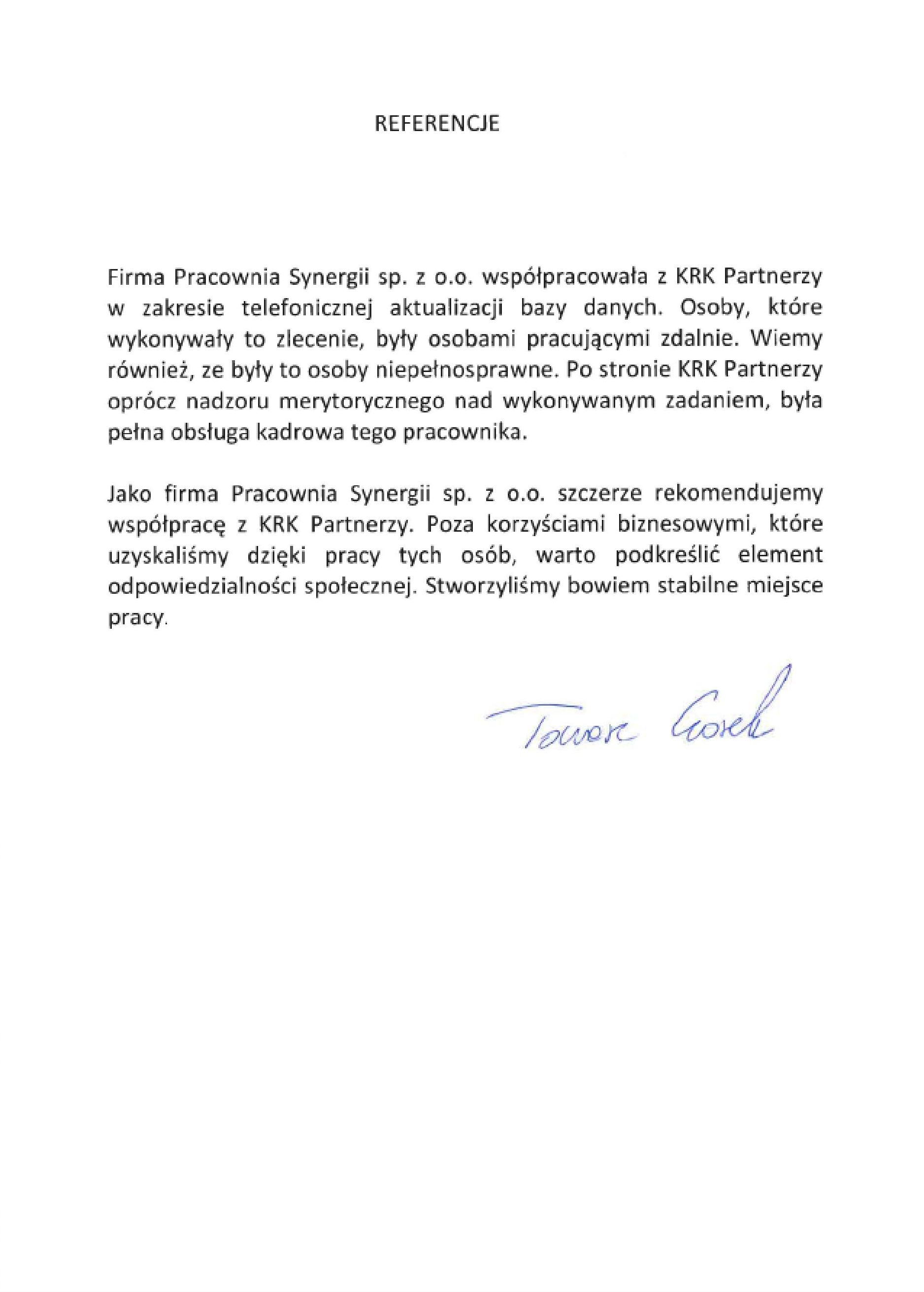
Testimonials

Here's what our partners say

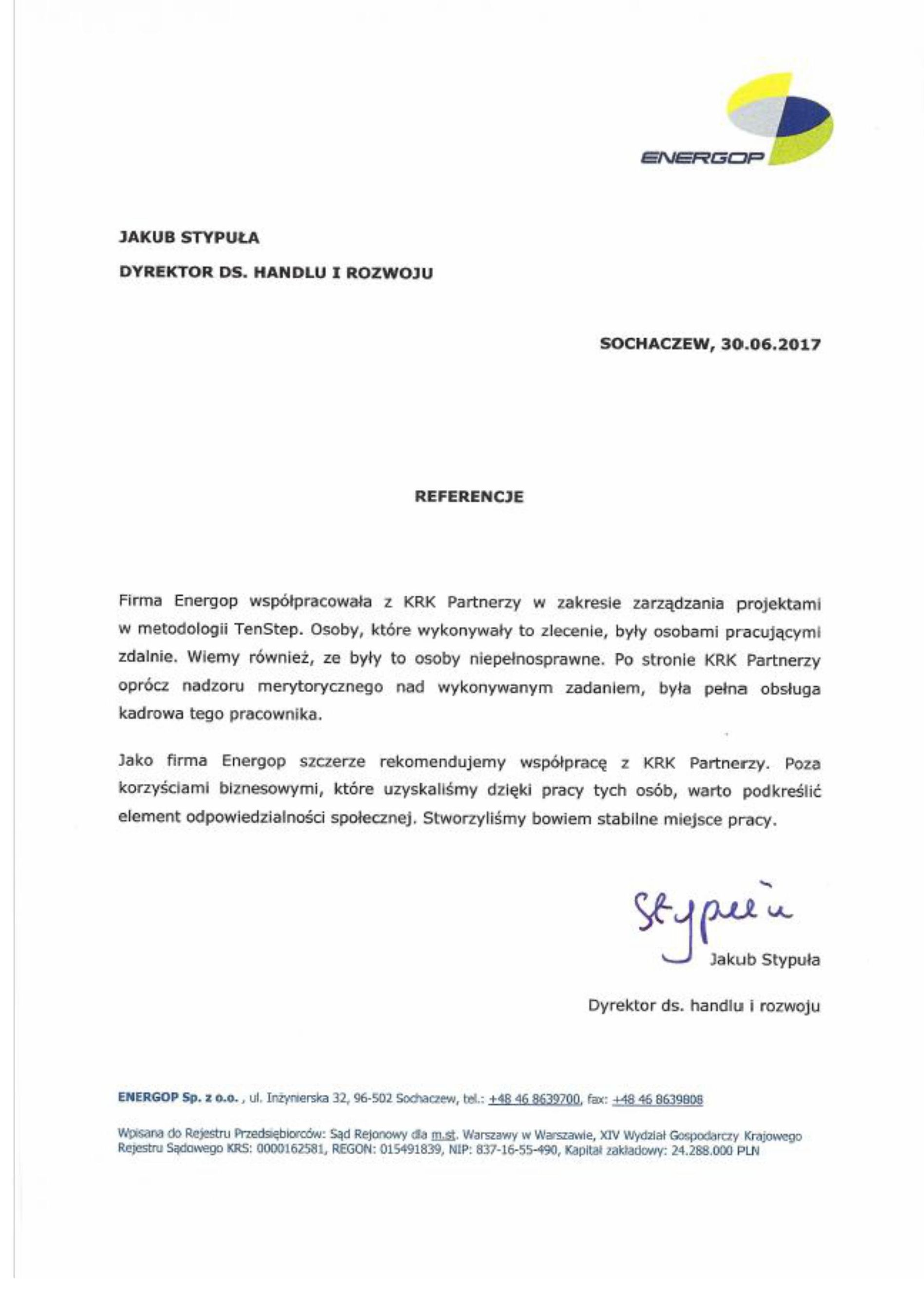
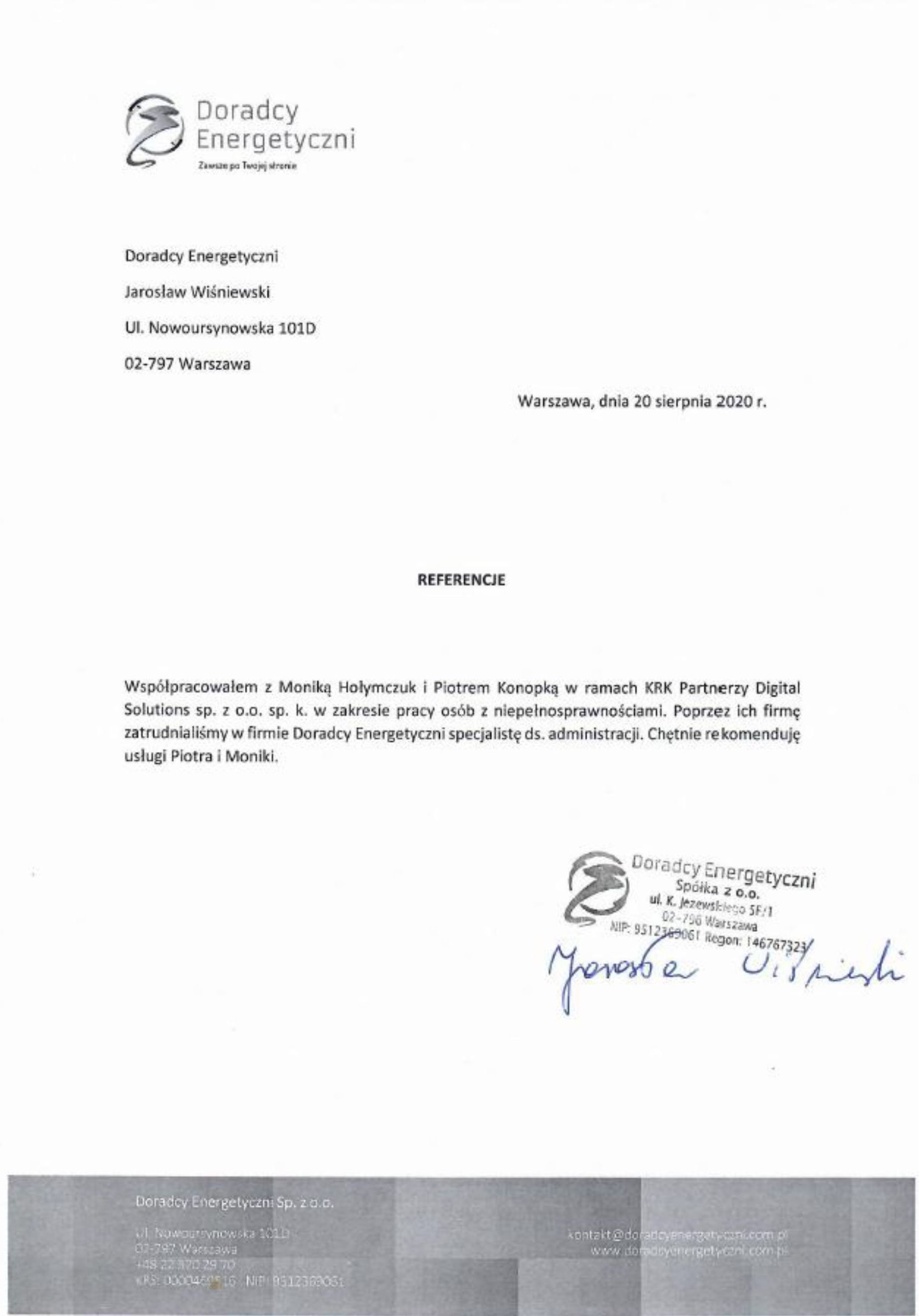
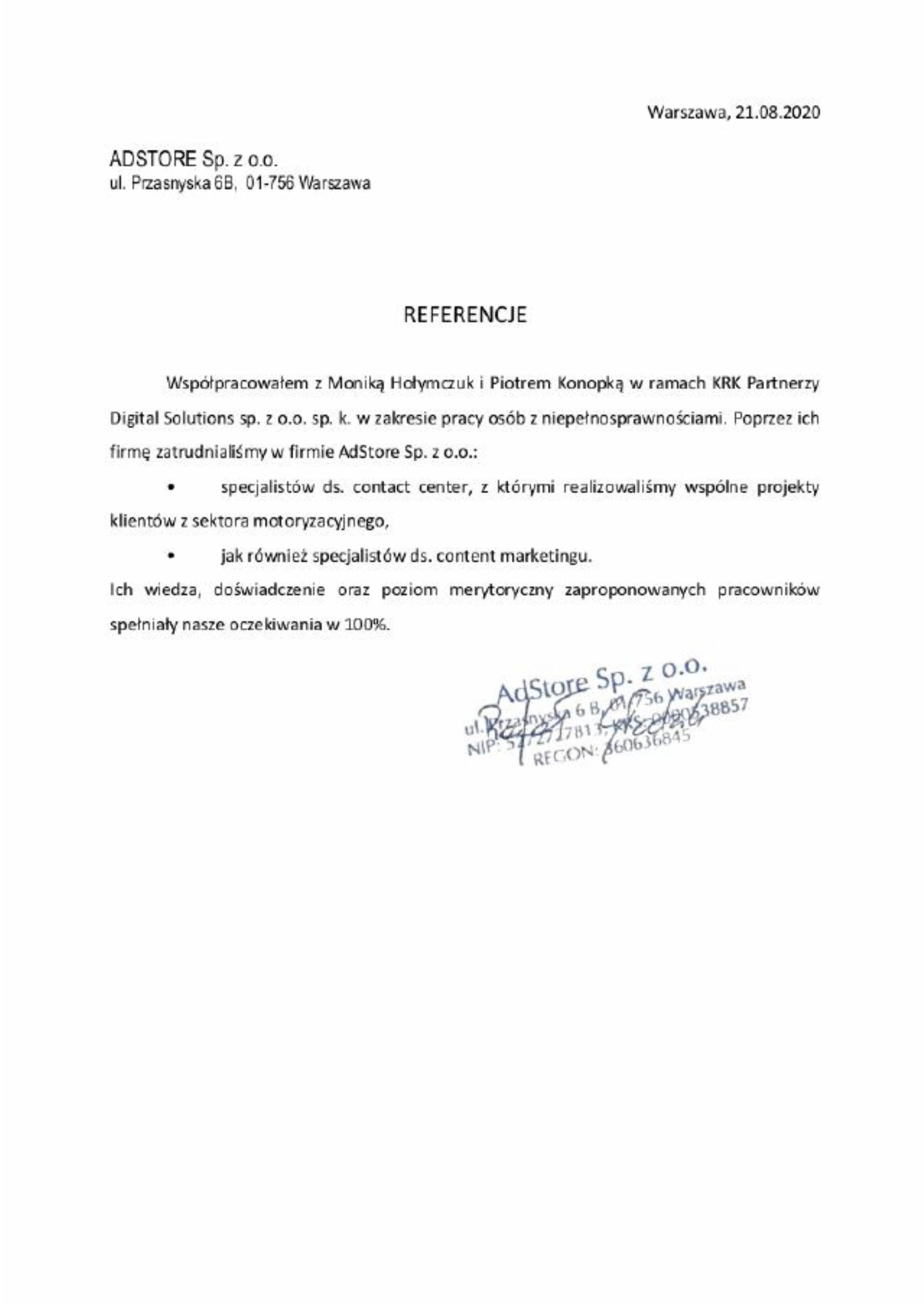
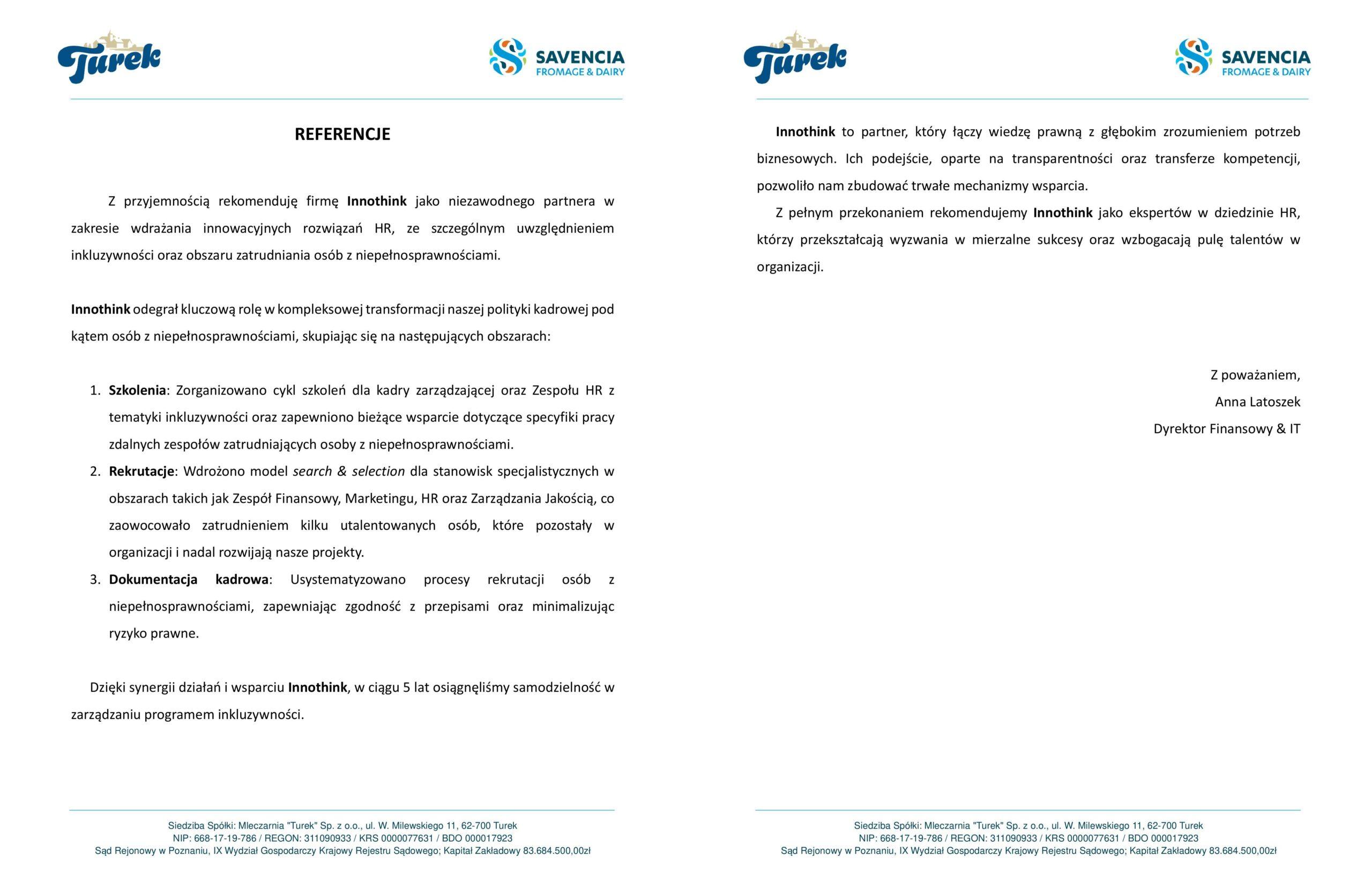
"Myślimy nad kolejnymi obszarami w ramach naszej organizacji, w których można wdrożyć model obsługiwany przez firmę Innothink. Rekomendujemy współpracę z Innothink. Dzięki jej usługom mamy pewność, że nasi pracownicy z niepełnosprawnościami są pod profesjonalną opieką, a nasza firma działa z najwyższymi standardami etycznymi i prawnymi, jednocześnie realizując swoje cele biznesowe."

"Proces został zrealizowany szybko, w ciągu miesiąca od podpisania umowy. Najbardziej wartościowym elementem był kompleksowy charakter usługi – od audytu i szkoleń po rekrutację i bieżące wsparcie. Zyskaliśmy nie tylko oszczędności, ale także zespół, który wnosi unikalną perspektywę do naszej organizacji."

"Polecam to, co robią Monika i Piotr. Ich doświadczenie i wsparcie merytoryczne pokazuje, że można mieć podejście biznesowe skutkujące w rezultacie w etycznym i odpowiedzialnym społecznie podejściu do zagadnień inkluzywności. To prawdziwy model win-win dla wszystkich stron."

Testimonials

Feedback from Managers During Implementations

Testimonials

Feedback from Employees Under Our Care

Shape

FAQ

We Are Here To Help You With Any Questions You May Have

The InnoThink model is based on building remote teams of qualified specialists with disabilities tailored to the Client’s business needs. It allows companies to eliminate PFRON penalty payments entirely, gain valuable employees, enhance organizational culture, and fulfill ESG and CSR objectives.

Employing persons with disabilities directly reduces the base used to calculate mandatory PFRON contributions. Each employee with a disability increases the company’s compliance ratio, lowering the amount owed. Monthly savings range from PLN 4,500 to PLN 18,000 per individual. How we calculate this

Rather than treating PFRON penalty as sunk costs, investing those resources in new employees yields better returns. Employing people with disabilities reduces expenses, eliminates PFRON penalty, brings in skilled professionals, strengthens a company’s image, and fosters a diverse, innovative team.

Yes. The InnoThink model is designed to help companies meet the legally required 6% employment rate of persons with disabilities, which grants full exemption from PFRON penalty. In practice, this means zero PFRON penalty — legally and effectively — as confirmed by our clients’ experiences.

Yes. Our qualified specialists with disabilities have worked remotely for years with the same efficiency as in-office staff. With proper tools and communication, they achieve results comparable to on-site work. Removing access barriers often boosts productivity further.

Flexible hours, clear communication procedures, and tailored tools are key. InnoThink supports employers in organizing home workstations to ensure persons with disabilities can work comfortably and productively.

Education and transparent communication are essential. We recommend training teams in inclusive practices before onboarding. InnoThink provides such training. Also, preparing the work environment and discussing necessary accommodations ensures smooth integration.

Companies observe increased engagement and reduced turnover. Diverse perspectives drive innovation. Hiring people with disabilities enhances company values of inclusion and empathy. It boosts employee pride in working for a socially responsible organization, enriching team cohesion.

They bring a full range of competencies — from analytics and IT, through finance and customer service, to creative skills in marketing and design. They often demonstrate outstanding resilience, adaptability, and problem-solving, developed by overcoming personal challenges.

InnoThink provides skilled professionals for areas such as customer service (contact centers), administration, accounting, digital marketing, IT (testing, analytics), and creative roles (graphic design, copywriting). All roles are effectively executed remotely.

Employers must follow specific regulations, such as shortened work hours for employees with moderate or severe disabilities. They must also register employment with PFRON and maintain proper documentation. InnoThink ensures full compliance support.

Yes. The model fully complies with Polish labor law and PFRON guidelines. Developed with leading legal advisors (SK&S law firm), our process ensures legal security and full transparency, delivering measurable financial and operational benefits.

We start with a needs and capability analysis, identifying tasks suitable for remote work. InnoThink assists in legal and operational setup, and often recommends a pilot to test the model before wider implementation.

It includes needs analysis, recruitment, equipment setup, and integration training. InnoThink coordinates the entire process — from PFRON audits to onboarding. First teams typically launch within a few weeks, depending on scope.

There is no single answer for an entire group. Performance depends on matching the person to the tasks, implementation quality, tools and management. We therefore set KPIs for a seven-hour working day and verify results using data. If someone does not meet the target, we respond as in any team: identify the cause, make an adjustment or take an employment decision.

At the outset, we define a good result in terms of volume, quality, timeliness and independence after implementation. The team receives feedback under the same accountability standards as other employees, with the agreed working arrangements taken into account. We do not promise the performance of a specific person before checking their competence and actual delivery.


Yes. InnoThink provides operational and HR support: documentation, PFRON monitoring, training, coaching, and team development. A dedicated advisor oversees your remote team’s performance and strategic growth.

Present concrete benefits. Highlight cost reductions (PFRON savings), access to skilled staff, and positive ESG/CSR impact. Case studies from successful implementations and expert support from InnoThink can help secure executive buy-in.

Common myths include lower productivity or higher absenteeism. In reality, our employees perform at peer levels with similar attendance. We address concerns with data, training, and real examples that shift perception from “risk” to “value.”

It directly supports the “Social” pillar of ESG and CSR goals. Creating jobs for persons with disabilities showcases inclusion and strengthens the company’s social responsibility — building long-term value for all stakeholders.

Inclusive workplaces strengthen brand reputation and improve ESG scores. In ESG reports, companies can highlight concrete results (e.g., % of employees with disabilities), which enhance credibility with investors and clients, and boost employer branding.

Yes. The InnoThink model is fully scalable. We maintain a vast candidate network and standardized onboarding processes, enabling us to build remote teams of dozens of qualified professionals. It’s proven effective even in large corporate environments.

Hiring individuals with disabilities lowers the employer’s PFRON assessment. The more such employees (relative to total staff), the smaller the fee. Reaching 6% employment rate of persons with disabilities grants full exemption from PFRON penalty.

It allows access to skilled professionals beyond the local area, avoids physical workplace adaptations, reduces costs, and increases satisfaction and productivity. Remote teams are often more flexible and loyal, creating operational and reputational value.

Our experience shows high loyalty among employees with disabilities. They appreciate inclusive environments and often show lower turnover. Companies using the InnoThink model report improved retention and team stability.

Future-ready jobs include remote, knowledge-based roles: IT (development, QA, data analysis), digital marketing (SEO, content, social media), and creative work (UX/UI design, copywriting). These roles are accessible and in high demand.

Use facts and real results. Employees with disabilities often meet or exceed performance standards. InnoThink educates employers and presents successful case studies, proving that ability, not disability, defines effectiveness.

No. Inclusive management is simply good management. What’s needed is awareness, flexibility, and open communication — not different principles. Clear goals, feedback, and equal development access apply universally to all teams.

PFRON penalty are not routine payments — they’re financial penalties for failing to meet legal obligations to employ persons with disabilities. They should be viewed as avoidable sanctions, not budgeted costs. With proper compliance, they can be eliminated.

We do not assume that persons with disabilities are inherently absent more often or always more loyal. Both claims are the same stereotype with opposite signs. We measure absence and retention using project data. In practice, work fit, predictability, the relationship with the manager and stable conditions matter more than the label attached to the employee.

For workforce planning, we use a process for cover and task handovers rather than a promise that absences will not occur. We compare retention across similar roles and periods, taking team size into account. A few successful hires do not justify a promise that every subsequent employee will be more loyal than the company’s other employees.

We measure the project from an agreed baseline covering the PFRON penalty, costs and work performed before implementation. The report shows savings, the value of completed work and total project cost, followed by the result: savings plus work value minus costs. Each component remains visible so that one number cannot conceal problems with quality or assumptions.

We value work using an agreed method, such as the cost of obtaining an equivalent accepted result. The same value is not counted again as a supplier saving. In the financial calculation, we do not add the nominal PFRON penalty to its grossed-up pre-tax equivalent. Employees are assessed against role-specific goals, quality, timeliness and a seven-hour working day.